


New: Clarity and control for modern overflow storage
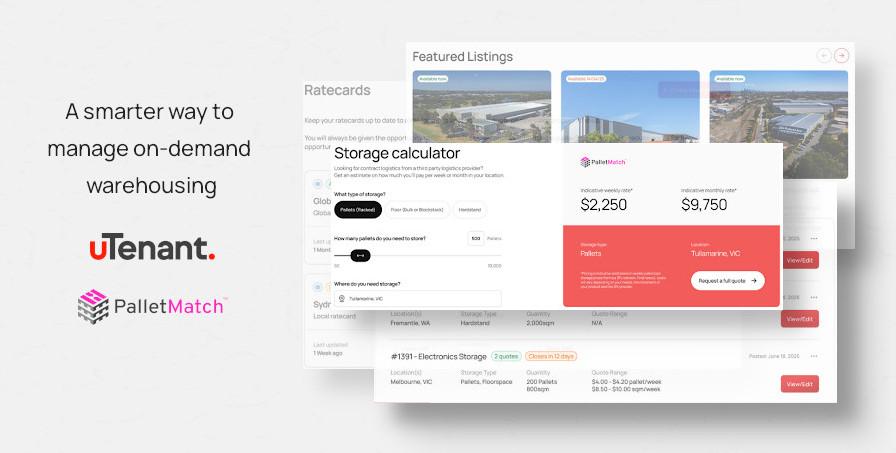
At uTenant, we’ve spent a lot of time thinking about what clarity actually looks like in modern on-demand storage. Not in theory, but in practice…when decisions need to be made quickly, with incomplete information AND with real consequences attached. We’ve seen how easily control slips away when quoting happens offline, when visibility lives in spreadsheets, and when critical conversations are scattered across calls and emails.
So rather than adding more complexity, we stepped back and asked a simpler question; ‘how should on-demand storage work if it were designed for how logistics teams actually operate today?’ The result is a quieter, more deliberate shift in the platform. One focused on reducing friction, improving visibility, and giving you and your teams confidence in the decisions you’re already making every day.
The following is a list of some of the major upcoming features in our latest release.
Rethinking the quoting game; from offline chaos to real-time control
Key takeaways:
- Quoting now happens end to end on the uTenant platform, in real time
- Phone calls and email chains are no longer required to manage quotes
- Customers retain full control over quote selection and supplier choice
- Anonymous, in-platform communication leads to better aligned quotes
About the update:
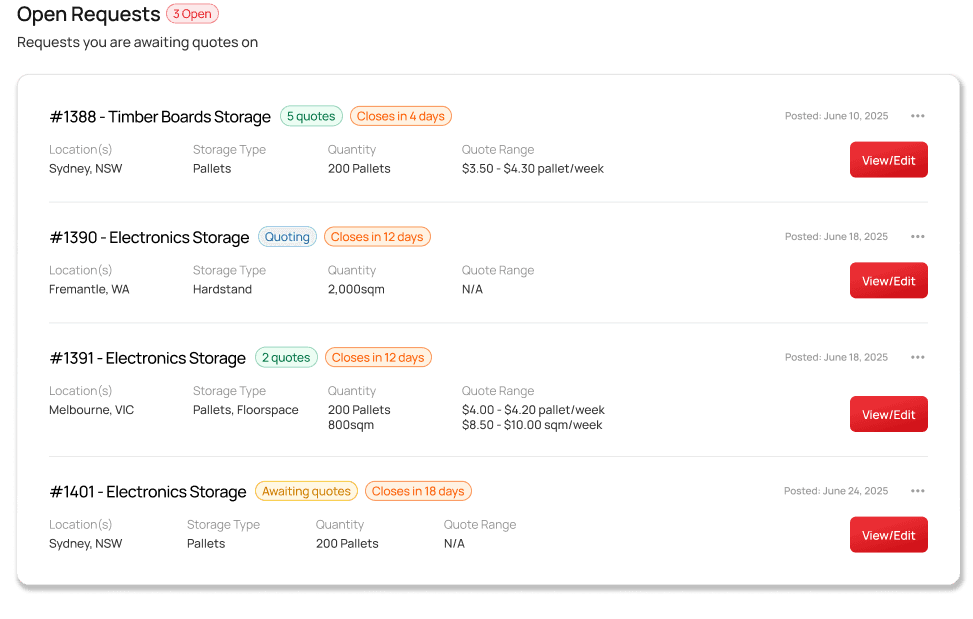
On-demand storage decisions often start in the least controlled way possible. A phone call here, an email there, and your spreadsheet doing its best to keep up. Quotes arrive at different times, details are buried in threads, and conversations happen in parallel with no clear record of what was agreed or why. Control slips because the process is fragmented.
Quoting on uTenant now happens end to end on the platform, in real time. Quotes are entered, reviewed, and compared in one place, giving customers a clear view of their options as they take shape. Just as importantly, customers stay in control, selecting the successful quote and preferred supplier with full visibility into the decision.
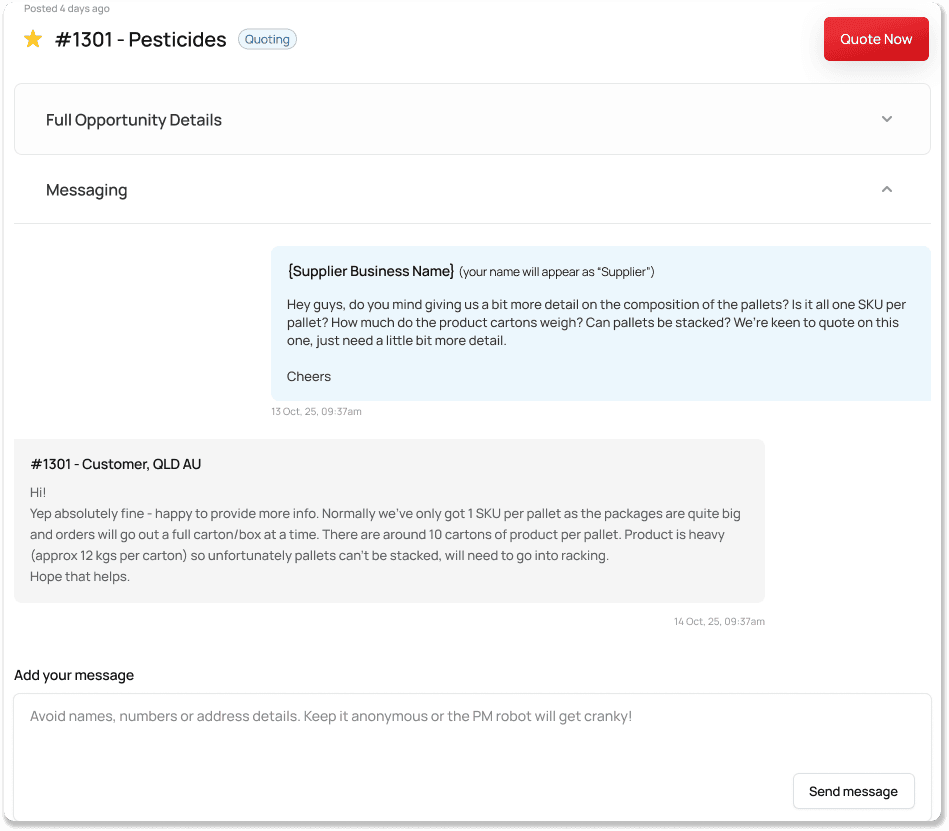
Clarity also depends on how conversations happen. During the quoting phase, customers and suppliers can now communicate directly and anonymously on the platform. Questions can be asked early, additional information shared, and requirements clarified before assumptions turn into issues later on. The result is more accurate quoted solutions and a clearer understanding of the work involved.
The aim wasn’t to accelerate decisions at any cost. It was to create a calmer, more deliberate decision point - one where everything needed to move forward is present, visible, and easy to understand.
Logistics takes a team. Your platform should support one.
Key takeaways:
- Automated SMS and email notifications alert teams to relevant opportunities
- Multiple users can access accounts with different permission levels
- Ratecards can be saved, reused, and edited for express quoting
About the update:
Responsibility for storage and supply chain rarely sits with one person. Decisions move between operations, commercial teams, and warehouse managers, as well as often across locations. When systems are designed for single users, gaps form, handovers slow things down, and opportunities are missed.
uTenant now reflects how logistics teams actually work. Opportunities that match a 3PL’s capabilities can trigger automated SMS and email notifications, ensuring they reach the right people as soon as they’re ready to act on. There’s no need to rely on one individual to monitor the platform or manually pass information along.
Accounts can also be accessed by multiple users, with clear control over roles and permissions. This allows teams to collaborate without losing accountability, and to share responsibility without confusion.
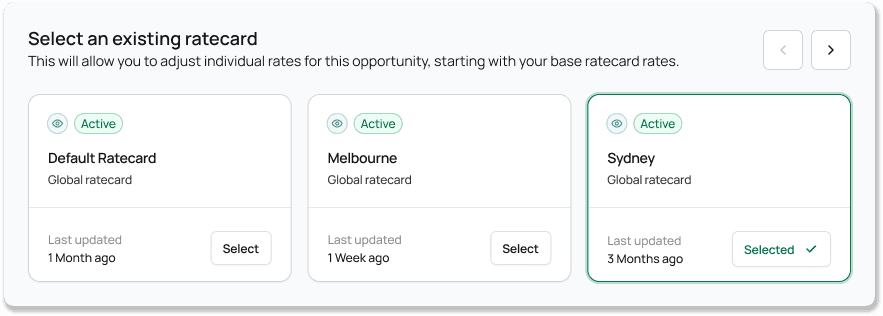
To support faster responses, suppliers can now save, reuse, and edit ratecards on the fly. This enables express quoting while keeping pricing consistent across the team, embedding knowledge into the platform rather than relying on individual inboxes or memory.
You can’t manage what you can’t see, warehousing included
Key takeaways:
- Warehouses can be mapped and updated directly on the uTenant platform
- Capacity, features, and services can be kept up to date as they change
- uTenant can be used as a live warehousing portfolio view for BDMs
About the update:
On-demand warehousing decisions don’t exist in isolation. They’re shaped by what’s available today, what’s changing tomorrow, and how capacity shifts over time. When that information lives in disconnected systems, or only gets updated when something breaks, teams are forced to operate reactively, always a step behind reality.
Supply chain decisions are often shaped by what’s available today and how that availability changes over time. When capacity information lives in disconnected systems or static records, teams are forced to react rather than plan.
This was a key challenge that came up consistently in our research, and one we are proud to have solved with this update.
Warehouses can now be mapped and maintained directly within uTenant. Capacity, features, and services can be updated as they evolve, giving teams a live view of what’s available and what’s changing. The platform reflects the real state of your warehousing network, rather than an outdated snapshot.
For business development and operations teams, this creates a clearer portfolio view. Capacity becomes something you can reason about and discuss with confidence, rather than something you scramble to confirm when requests come in.
Knowing the right rate, in the right place, at the right time
Key takeaways:
- Estimated storage costs are informed by ratecard and platform data
- Rates can be benchmarked by location
- Teams can sense-check whether pricing is appropriate for their market
About the update:
Pricing decisions are difficult to validate without context. Rates vary by location, availability shifts quickly, and comparisons are often made using partial or outdated information.
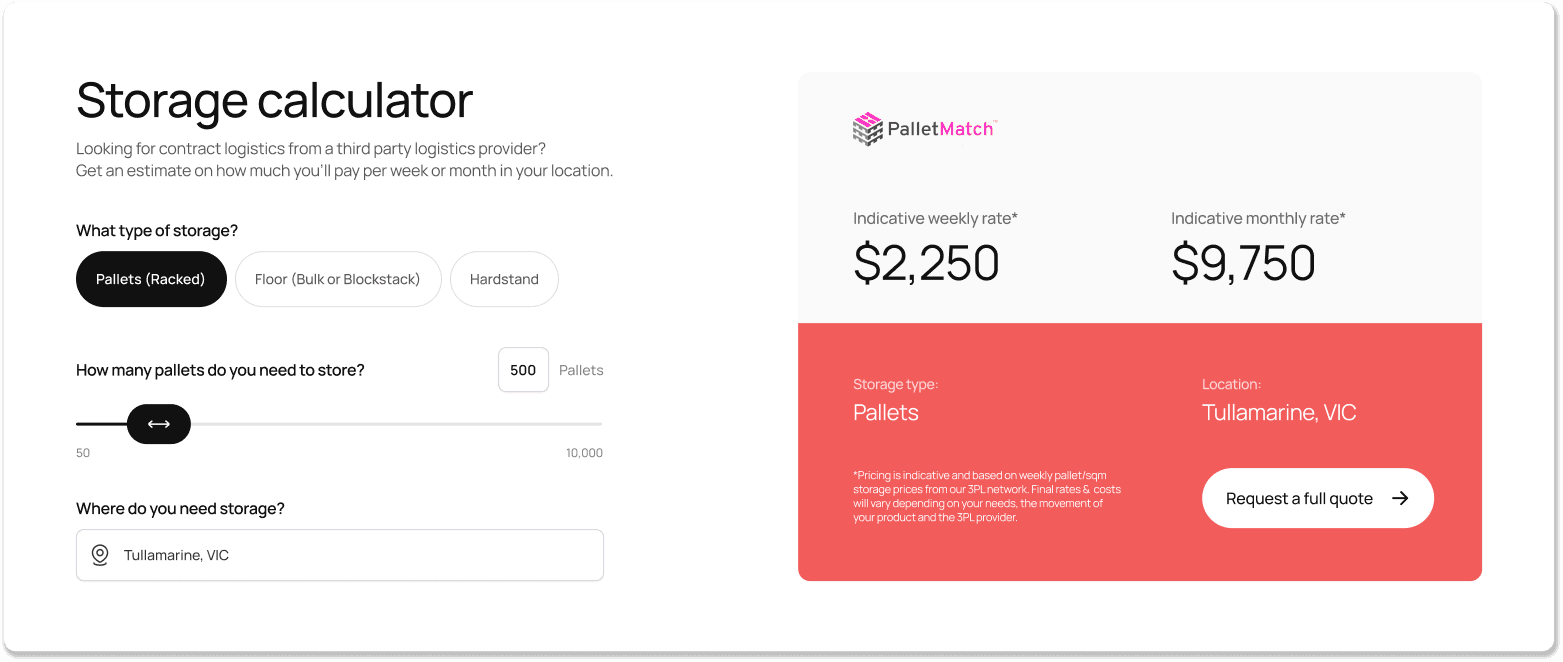
Using ratecard data and platform rates, uTenant can now provide estimated storage costs and benchmarked rates for specific locations. This gives teams a clearer understanding of how a quoted rate compares within the broader market, helping them assess whether pricing is in line with expectations.
This isn’t about enforcing uniform pricing. It’s about providing commercial context so decisions feel more informed and defensible at the point they’re made.
When plans change, clarity still matters
Key takeaways
- uTenant supports customer re-housing when agreements no longer fit
- Providers can help customers find a new home for their stock
- Public property listings allow pressure-free browsing of lease and sub-lease options
About the update:
Not every overflow storage decision is about growth. Sometimes requirements change, customers outgrow facilities, or relationships no longer make sense for either side.
uTenant now supports customer re-housing, allowing providers to help customers find a better-suited home for their stock when an agreement comes to an end. This creates a more measured transition, reducing disruption for customers and allowing providers to step away without unnecessary friction.
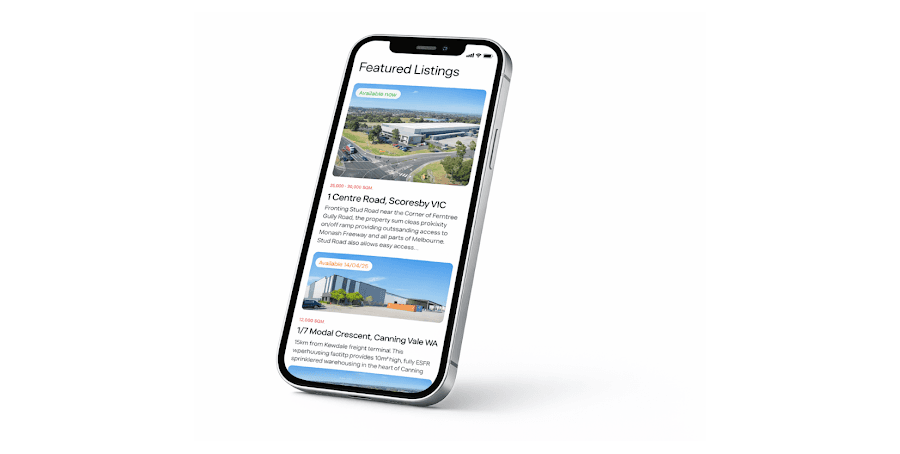
The same principle applies to how space is discovered. Public property listings on uTenant allow teams to browse available lease and sub-lease opportunities as they appear, without agents, follow-up calls, or pressure to act.
Conclusion: The power of control in storage and supply chain
The updates in this release introduce new capabilities across quoting, visibility, pricing context, and how change is handled, but they all stem from the same intent:
- To reduce fragmentation,
- To keep decisions in one place,
- And to give teams clearer footing when pressure is high and information is incomplete.
Rather than treating each improvement in isolation, we focused on how they work together, supporting the moments where control most often slips away. The result is a platform that does more than before, but in a way that feels steadier, more deliberate, and better suited to how overflow storage actually operates day to day.
We’ll be releasing these updates over the coming weeks.
If you’d like to stay informed, leave your email and we’ll let you know as each update becomes available.