Excess inventory before EOFY? Storage options for Australian supply chain teams
EOFY has a way of sneaking up.
One minute things feel under control.
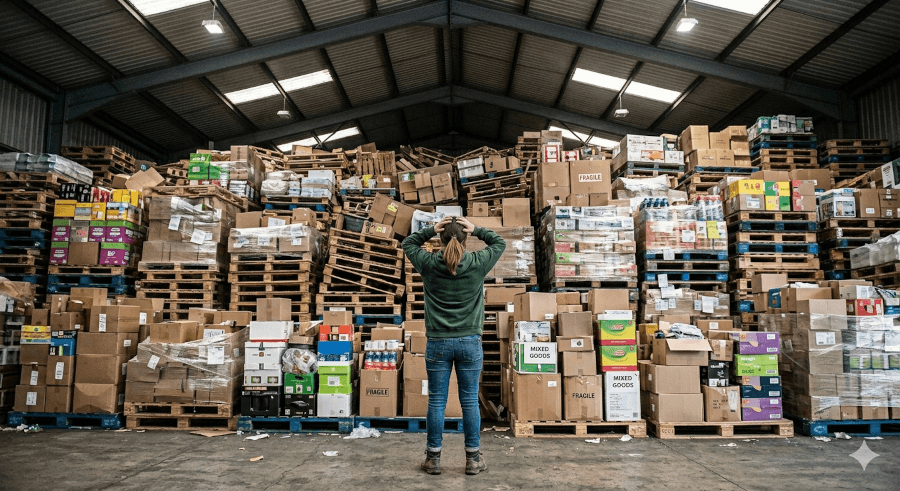
Next minute you’re looking at:
- Extra stock sitting in the warehouse
- Purchase orders you can’t delay
- Limited space and even less time
For many Australian supply chain teams, this is the reality in the lead-up to June 30.
The question isn’t whether you’ll need more space.
It’s how quickly you can find it, and how well it works when you do.
TL;DR
- EOFY often creates short-term inventory spikes across Australia
- Traditional warehousing isn’t built for fast or flexible overflow - How to tackle this
- The biggest challenge isn’t space, it’s finding the right space quickly
- On-demand warehousing is becoming the go-to solution for overflow inventory
- The right setup can reduce delays, improve visibility and avoid rushed decisions
Why excess inventory builds up before EOFY
EOFY isn’t just a finance deadline. It’s an operational one.
Across Australia, teams are:
- Bringing forward inventory to hit revenue targets
- Taking advantage of bulk purchasing or supplier timing
- Clearing or repositioning stock before year-end reporting
- Preparing for seasonal demand shifts
And the result? A short-term surge in inventory that your existing warehouse wasn’t designed to handle.
The real problem isn’t storage, it’s timing
On paper, finding extra space sounds simple, but in reality, it looks kind of like:
- Emailing multiple 3PLs
- Waiting on responses
- Comparing inconsistent quotes
- Losing time while availability changes
And during EOFY?
Everything moves faster and, importantly, good space doesn’t stay available for long.
This is where most teams get stuck, not because there’s no space, but because the process to find it is far too slow.
Your main storage options (and when they work)
Let’s break this down simply.
1. Expanding within your current warehouse
Best for: Small increases in inventory
Challenge: Most warehouses are already operating close to capacity
This can work if you’ve got a bit of flexibility. But for most teams, EOFY spikes push beyond what’s realistically possible.
2. Long-term 3PL contracts
Best for: Predictable, ongoing storage needs
Challenge: Not built for short-term overflow
Traditional contracts take time to negotiate and aren’t designed for temporary spikes. You risk overcommitting or moving too slowly.
3. Short-term overflow through your network
Best for: Quick fixes if you have strong relationships
Challenge: Inconsistent, manual, hard to scale
Calling around can work… until it doesn’t. It’s reactive, time-consuming, and often lacks visibility.
4. On-demand warehousing
Best for: Fast, flexible overflow storage
Challenge: Requires a better way to match supply and demand
This is where things are shifting.
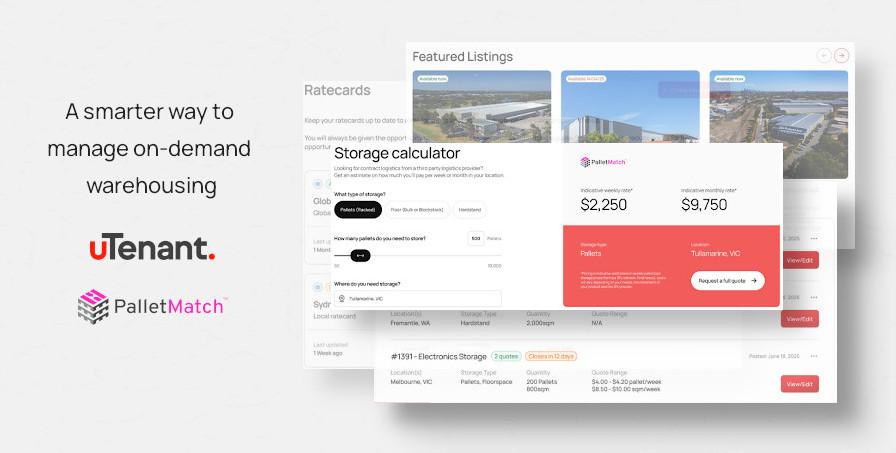
Instead of manually sourcing space, on-demand models connect you to available capacity quickly, helping you compare, decide, and move faster.
It’s not about finding more warehouses, it’s about better access to the ones already out there.
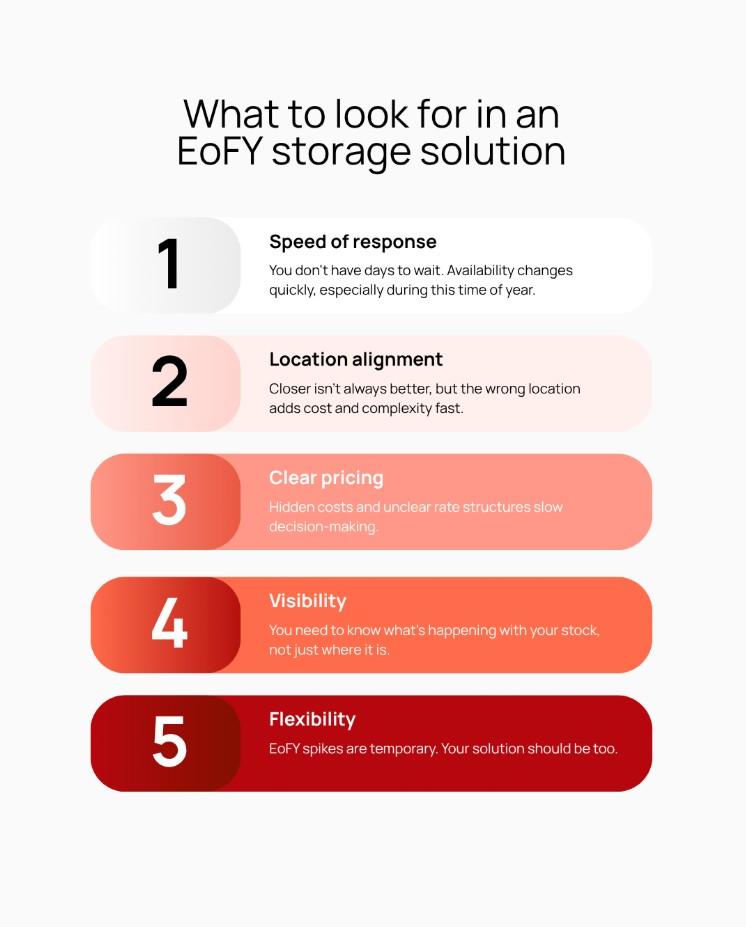
What to look for in an EoFY storage solution
Not all overflow solutions are equal. If you’re sourcing storage in the next few weeks, focus on:
Speed of response
You don’t have days to wait. Availability changes quickly, especially during this time of year.
Location alignment
Closer isn’t always better, but the wrong location adds cost and complexity fast.
Clear pricing
Hidden costs and unclear rate structures slow decision-making.
Visibility
You need to know what’s happening with your stock, not just where it is.
Flexibility
EoFY spikes are temporary. Your solution should be too.
Why this shift is happening now
The Australian warehousing market hasn’t suddenly run out of space.
What’s changed is how it’s being accessed.
More supply chain teams are moving away from:
- Manual sourcing
- Static contracts
- Reactive decision-making
And more towards:
- Faster matching of supply and demand
- More flexible storage models
- Better visibility across operations
In other words, from chaos to control.
A better way to handle EoFY overflow
If you’re heading into EoFY with excess inventory, you’re not alone.
The difference isn’t whether you need extra space, it's how you approach finding it.
The teams that handle EoFY best aren’t the ones with the most capacity.
They’re the ones who can:
- Move quickly
- Compare options easily
- Make confident decisions under pressure
Looking for space before EoFY?
If you need to move quickly, having a clearer, faster way to find and secure storage can make all the difference.
Talk to the team at uTenant to see how we can help you find space today.
FAQs: EoFY Inventory & Overflow Storage
How can I store excess inventory before EOFY in Australia?
The fastest way is to use short-term or on-demand warehousing platforms like uTenant. This allows you to access available space quickly without committing to long-term contracts, which is ideal for temporary EOFY inventory spikes.
What is the best storage option for short-term overflow inventory?
It depends on your timing and flexibility.
- Existing warehouse space works for small increases
- 3PL contracts suit long-term needs
- On-demand warehousing is best for fast, flexible overflow
For EOFY, most teams prioritise speed and availability over long-term cost optimisation.
Why is it harder to find warehouse space before EOFY?
Demand increases across the supply chain as businesses bring forward inventory, clear stock, and prepare for reporting deadlines. This creates short-term pressure on warehouse availability, especially in key logistics hubs.
How quickly can I secure overflow storage?
It can take anywhere from a few hours to several days depending on how you’re sourcing.
Manual processes (emails, calls) are slower, while platforms that match supply and demand can significantly speed this up.
What should I consider when choosing a 3PL for overflow storage?
Key factors include:
- Location
- Availability
- Pricing structure
- Speed of response
- Visibility of your stock
During EOFY, responsiveness and clarity are often more important than finding the absolute lowest cost.
Is on-demand warehousing reliable for Australian supply chains?
Yes, it’s becoming a more common approach, especially for handling overflow and seasonal demand. The key is using a platform that you trust and having clear visibility across your inventory.
Can I store inventory short-term without a long-term contract?
Yes. Many providers offer flexible or short-term arrangements, particularly for overflow storage. This is increasingly important during periods like EOFY where demand is temporary.
What industries are most affected by EOFY inventory spikes?
Retail, FMCG, manufacturing, and wholesale distribution are among the most affected, particularly those managing seasonal demand or large volumes of physical stock.